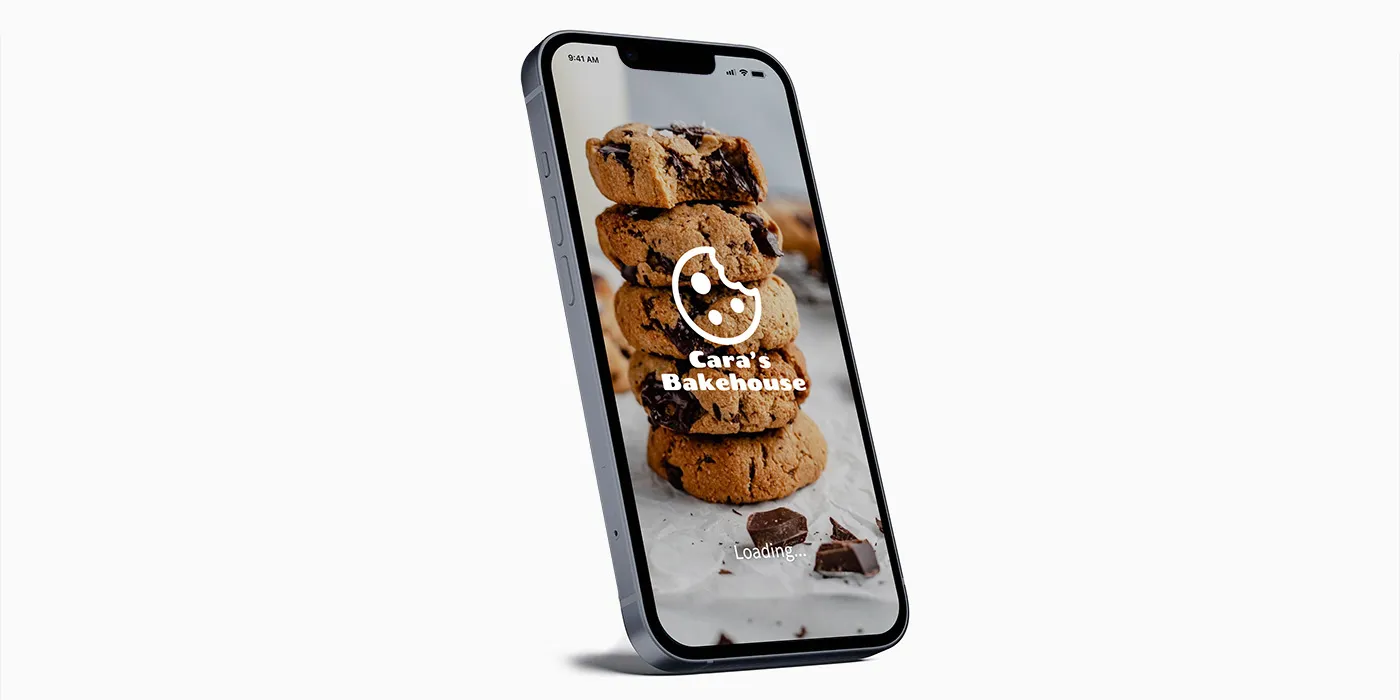
Cara's Bakehouse Mobile Ordering App
Designing a streamlined ordering experience for a gluten-free, vegan, and paleo bakery
Role
UX/UI Designer
Timeline
3 months
Team
Solo designer
The Challenge
Cara’s Bakehouse is a Portland-based bakery known for its gluten-free, vegan, and paleo treats. Despite a loyal customer base and growing demand, the bakery relied almost entirely on phone orders, creating inefficiencies for staff and friction for customers.
The business needed a mobile app that would simplify ordering, enable scheduling for deliveries and pickups, and reduce operational strain — all while preserving the bakery’s friendly, personal service.
Customer pain points:
- Phone ordering was slow and inconvenient, especially during peak hours
- Pickup and delivery scheduling wasn’t clear or consistent
- No way to save preferences or quickly reorder favorites
- Limited visibility into available products and times
Business pain points:
- Staff spent excessive time taking and modifying phone orders
- Scheduling conflicts were common due to manual tracking
- Phone-based system was prone to errors and miscommunication
- No capacity to handle orders outside business hours
The mobile app needed to strike a balance: reduce staff workload while improving the customer experience — without losing the bakery’s personal touch.
Research & Discovery
Customer Survey
To inform design decisions, I conducted a Google Forms survey with potential customers and existing regulars. Questions focused on:
- Current ordering methods and pain points
- Feature priorities (scheduling, order history, customization)
- Frustrations with existing workflows
- Preferences for delivery vs. pickup
Key findings:
- 78% of respondents preferred mobile ordering over phone calls
- Delivery scheduling and saved order history were the most requested features
- Customers wanted clear distinctions between fresh-baked and take-and-bake options
- Ingredient transparency was critical for health-conscious buyers
User Personas
Using survey insights, I developed three key personas to guide feature prioritization:
Busy Professionals — Need fast, repeatable ordering with reliable delivery options. Value efficiency and consistency over customization.
Health-Conscious Parents — Want customization options and ingredient transparency. Need flexibility for dietary restrictions and family-sized orders.
Local Regulars — Place frequent, smaller pickup orders. Value speed and familiarity, prefer quick reordering of favorites.
“I love Cara’s, but calling in every week takes too much time. If I could just tap ‘reorder’ that would be perfect.”
— Survey respondent, orders weekly
Key Insights
- Saved orders drive repeat business — Regular customers wanted one-tap reordering, not starting from scratch each time
- Scheduling needs visibility — Users wanted to see available pickup/delivery windows upfront, not discover conflicts at checkout
- Product clarity prevents confusion — Fresh-baked vs. take-and-bake needed clear differentiation throughout the flow
- Personalization builds loyalty — Account-based features and order history were essential for retention
Design Process
Information Architecture
Structured the app around four core user flows:
- Browse & Order — Product catalog with filtering by type (fresh-baked, take-and-bake)
- Schedule Delivery/Pickup — Calendar-based scheduling with real-time availability
- My Account — Order history, saved favorites, and reorder functionality
- Checkout — Streamlined payment and confirmation flow
Key Features & Flows
Account setup and saved preferences: Users could create profiles with delivery addresses, payment methods, and dietary preferences to accelerate future orders.
Pickup and delivery scheduling: Designed a calendar interface with clear visual indicators for available time slots. Real-time availability prevented scheduling conflicts and set accurate expectations.
Fresh-baked vs. take-and-bake distinction: Used clear labels, icons, and category separation throughout the browsing experience. Product pages emphasized preparation differences and timing requirements.
Customizable ordering: Enabled quantity selection, special requests, and saved favorites. Regular customers could build a personalized “frequent orders” list for one-tap reordering.
Wireframes & Prototyping
Created low-fidelity wireframes to map core user flows based on persona goals. These wireframes established:
- Navigation structure and information hierarchy
- Key interaction patterns for scheduling and customization
- Checkout flow optimization
Built an interactive prototype in Figma to simulate the end-to-end experience and validate flows before development.
User Testing & Iteration
Tested the prototype with a small group of potential users, gathering feedback on clarity, efficiency, and usability.
Round 1 findings:
- Users struggled to differentiate fresh-baked from take-and-bake options in the product list
- Delivery scheduling needed stronger visual cues for available vs. unavailable times
- The reorder feature wasn’t discoverable enough in the account section
Iterations applied:
- Added prominent badges and color coding to distinguish product types
- Redesigned the scheduling interface with clearer availability indicators and time slot selection
- Moved “Reorder” to a more prominent position in the order history
- Simplified the checkout flow by pre-populating saved preferences
Results
Based on projected impact and stakeholder feedback:
- Reduced staff workload — Phone order volume expected to drop significantly, freeing staff for baking and in-store service
- Improved customer convenience — 24/7 ordering capability and saved preferences streamline repeat purchases
- Better scheduling clarity — Real-time availability prevents conflicts and sets accurate expectations
- Foundation for retention — Account-based features and order history position the bakery for long-term customer loyalty
Reflection
This project reinforced the power of user research in shaping intuitive experiences. By aligning customer needs with business goals, I created a mobile ordering solution that simplifies the process for users while helping the bakery scale operations with less strain.
What worked well: The persona-driven approach kept design decisions grounded in real user needs. Validating flows through prototyping surfaced critical issues — like the fresh-baked vs. take-and-bake confusion — before development began, saving time and resources.
What I’d do differently: I would have conducted more extensive testing with actual bakery staff to validate operational workflows. While the app solved customer pain points, deeper collaboration with the team would have uncovered additional opportunities to streamline backend processes. Additionally, building in loyalty rewards and notifications from the start — rather than as future enhancements — would have strengthened the retention strategy immediately.
Future enhancements identified during the design process include loyalty rewards to encourage repeat purchases, improved accessibility features, and integrated order tracking with push notifications.